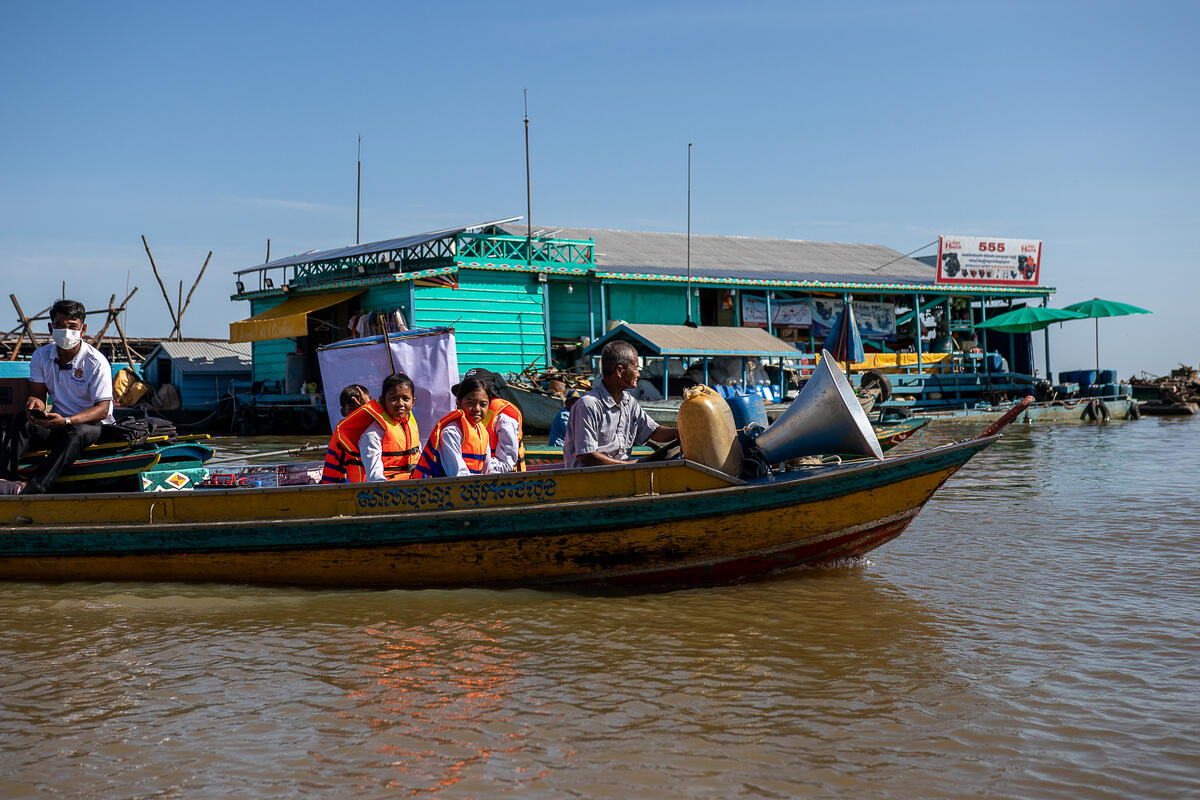
Endline Evaluation Report: Generating Resilient Environments and Promoting Socio-economic Development of the East Tonle Sap Lake Project (EU GREEN Project)

Summary
The EU-GREEN Action (2021–2025) implemented by Save the Children International (SCI) Cambodia aimed to strengthen climate resilience and socio-economic development among vulnerable fishing communities in Cambodia’s East Tonle Sap region.
Operating in Pursat, Kampong Chhnang, and Kampong Thom provinces, the project targeted fisherfolk, women, youth, and ethnic minorities by promoting green economy initiatives, enhancing educational access, and expanding WASH services. Through collaboration with local authorities, NGOs, and the private sector, the action introduced climate-resilient livelihoods—such as aquaculture, eco-tourism, and sustainable agriculture—while improving school infrastructure, expanding early childhood education, and delivering hygiene education. WASH interventions included clean water access, floating latrines, and waste management systems. The initiative aligned with national development plans and global frameworks such as the Sustainable Development Goals, reaching over 40,000 individuals across diverse communities.
The action’s achievements were notable across the OECD-DAC criteria. It was highly relevant to local needs and aligned with Cambodia’s policy environment, although engagement varied across communities. The project was generally effective in delivering outcomes, especially in health, livelihoods, and education, though results were uneven in remote and marginalized areas. Efficiency was affected by high personnel costs, procurement delays, and COVID-19 disruptions, but adaptive management helped sustain implementation. Tangible impacts included improved hygiene behaviors, diversified incomes, increased school attendance, and stronger local systems. Sustainability was bolstered by community ownership and capacity-building, though continued support is needed for infrastructure upkeep, inclusive service delivery, and long-term financing—particularly in the most vulnerable communities.
Click here to access the evaluation from Save the Children
Comments
There is no contentYou must be logged in to reply.